On the next-to-last day of being seventeen, Luna Vance came very close to staying in the Mar Menor.
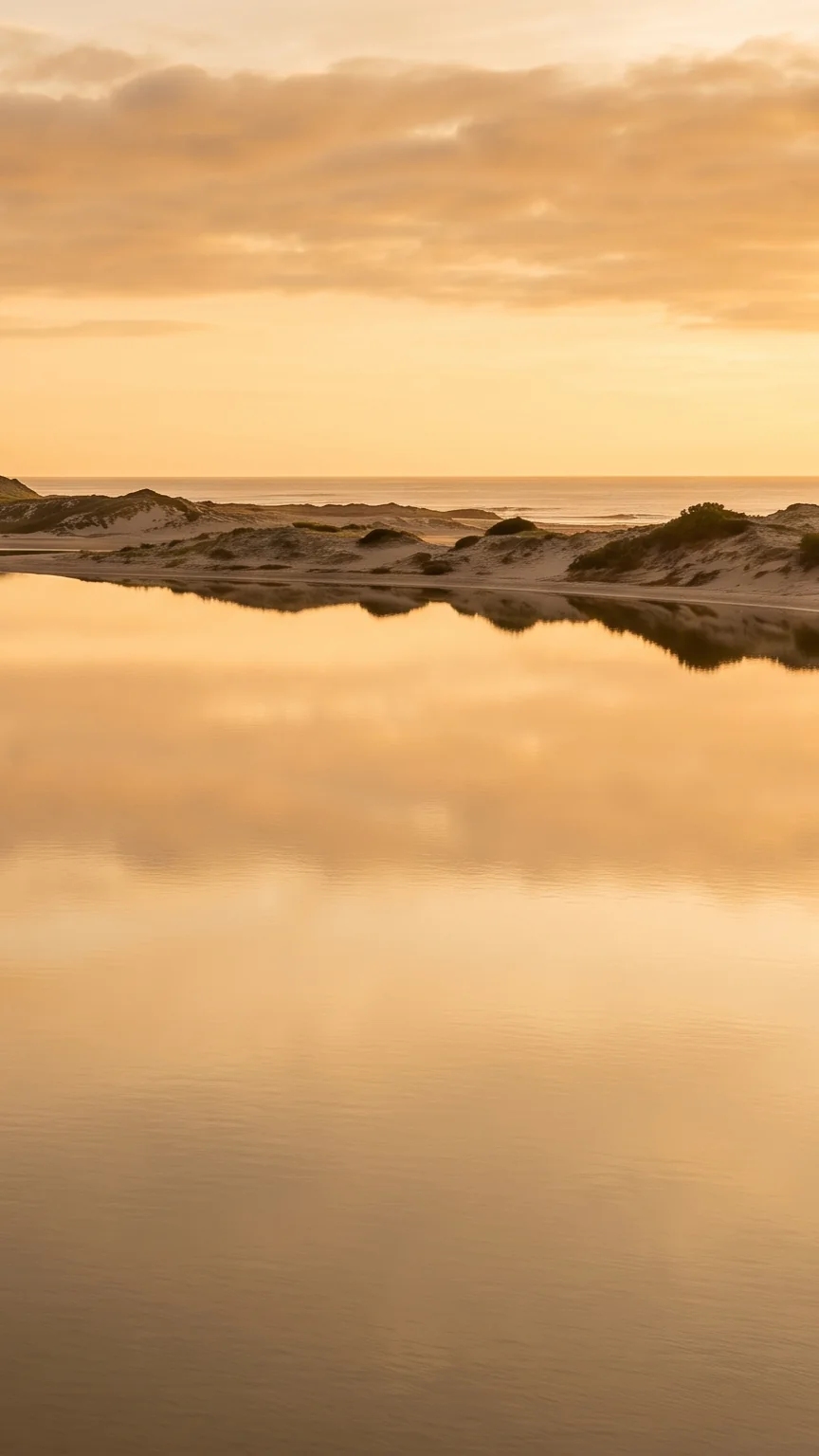
It didn’t look that way until the end, because the afternoon was a gift of an afternoon: third day of levante, the wind vaulting the strip from the Mediterranean side and ironing the Mar Menor flat along the home shore, the water smooth and golden as far as she could see. Crossing to the jets was an old idea. The jets were the points on the far coast where the system was giving the lagoon its life back: water from the big sea, piped across from shore to shore, pushed along by the sun the houses had left over—renewal diffusers, said the screen on the bathing pier; the jets, said everyone. In August people swam out to them because the water around them came out a touch cooler; in May, with the days already long and the rooftops giving light away, they ran fuller than ever, and nobody went, which was the best reason to go. Ten long kilometers with the wind astern. An hour and a half, counting the return upwind. Leaving mid-afternoon, there was daylight to spare. She had done it a hundred times in her head and not once with the kite.
The glasses stayed in her room, folded, and inside the glasses stayed Granpa. It wasn’t an oversight and it wasn’t defiance: it was the oldest rule they had, older than almost all the others. The water was hers. The rest they could share.
The way over was a party. With the wind behind her the lagoon was a racetrack, and Luna read the bottom as it went by, the way you leaf through a book that keeps getting better: the sand in small dunes, the dark patches of the meadow—the seagrass meadow that according to her mother had been dead since before she was born, and was now passing under her board at real kilometers per hour, with Luna’s shadow running along it—the schools of little fish opening in arrows as she passed. She couldn’t save any of it. For once she looked at things the way you look at what isn’t coming around again, which was, she would think much later, how everyone had looked at everything for the whole of history except the last twenty years.
The jets announced themselves from far off: a patch of livelier water, a different ripple against the afternoon, and beside it, anchored, a little white boat with tired paint that at school was as much Ginés as his last name. Ginés Conesa, her age, rod in hand and feet hanging over the side, was waiting for her. Luna set the kite down on the water in the little boat’s lee, talked him through where to grab it to bring it aboard, and swam the last meters into the cold plume.
“Feels good, huh?” he said, without quite looking at her. “Half a degree, says the screen. A town’s faith moves mountains and half a degree.”
The water around the diffuser was from another family, clearer, with a soft push climbing from below, and gripping one of the lines of the structure, small and bolted to the world, a seahorse rocked in the current with the patience of what has come back. Luna watched it until her neck ached from not moving, wondering where it could have come from: whether it was left over from before, from the lagoon that died, or had arrived afterward, with the new water—a tourist who’d settled in, like nearly everyone in La Manga. She wondered whether the difference mattered to the seahorse at all, holding its line, in its imported current. She couldn’t save that either. She watched it a while longer.
They talked about little, and all of it the right size: the season getting started—Ginés poured drinks on weekends at a beach club on the strip, until something better came along, or at least something with a booth—who was still around from school and who had gone inland. At no point did he tell her that crossing ten kilometers of lagoon with nothing to float on but the kite was either a feat or an act of recklessness; he kept the conversation going with one eye on her and one on the water, in a way Luna didn’t register at the time and that was, though neither of them would have called it that, a way of standing watch.
“Go on, now,” said Ginés when the sun began to fatten over the interior. “This drops with the sun.”
“The forecast says wind till ten.”
“The forecast.” He took in line with two turns of the wrist, no hurry. “The forecast isn’t from around here.”
She left late, of course. Late because of the seahorse, late because of the cold plume, late from that bookkeeping of hers—one more minute—that always came out owing. Ginés held the kite up into the wind from the bow and didn’t let it go until he felt it pull. The first two kilometers she worked upwind cleanly, in long tacks; on the third the levante began to breathe more slowly, and at mid-lagoon, with the home shore and Ginés’s shore at the same useless distance, the wind died the way old men fall asleep: all at once and without apologizing. The kite hesitated in the sky, lost its shape and lay down on the water in front of her, twelve meters of cloth with the exact look of what it suddenly was: a wet bedsheet in the middle of a sea that was going out.
Fear didn’t come right away. Arithmetic did. She ran the self-rescue by the book, not a motion wasted—lines wound in, the kite gripped by its leading edge, her body over the board and the cloth for a makeshift sail—and set to calculating: drift, distances, the light that was left, the moon there wasn’t. The numbers didn’t work. Swimming, towing the kite, no shore arrived before night did, and that night, with no moon, was going to be the real kind. The lights of both shores were coming on, all of them, thousands, and they were good for nothing. It was then, with the last light going down inland and her legs in black, lukewarm water that no longer had anything domestic about it, that their oldest rule presented itself to her inside out, in its night version: at home they didn’t even know she had crossed, and she had no way to tell them. She had wanted it that way all her life. She had just learned what it cost.
She heard the motor before she saw the light. It came straight, no S-curves, as if the water at night had roads and the little boat knew them by heart, and when it was alongside her Ginés didn’t ask if she was okay, which is a question with no answer: he asked whether she was cold and where she wanted the kite. He brought it aboard in one pull, with a hand hardened by fishing line, folded the twelve meters of soaked cloth in the four moves of somebody who has folded nets all his life, and pointed the bow toward La Manga at half throttle, saying nothing about the forecast, saying nothing about anything, with that way of his of being past it all, which at school looked like clowning and that night, on his boat, on his water, was simply what someone looks like where he’s in charge. In the air, Luna thought, she was the one in charge. This was not the air.
“How did you know?” she asked, mid-lagoon.
“The wind clocked out at eight.” He shrugged, eyes on the lights of the strip. “Around here even the boat knows that.”
Of that day, not one second remained in any archive. The day Luna came closest to not turning eighteen exists only in two memories that take no queries: hers, and that of a boy from Los Alcázares who moored late, handed her back the kite folded the way you hand back a newspaper, and would never tell anyone. Of that, Luna was sure.
IIThe last day of being seventeen she spent where she had spent the best of them: in the air, between two seas. That was La Manga: a twenty-kilometer street of sand with a sea in each pocket—the Mediterranean to levante, open and with a temper; the Mar Menor to poniente, flat and lukewarm like something domestic, though it had just shown her another face—and anyone who grew up there learned early that the two didn’t get you wet the same way.
Another girl, after a night like that, would have stayed ashore a week. Luna spent breakfast redoing the night’s numbers—where the calculation had failed, what Ginés’s boat knew that the forecast didn’t—and by afternoon she was in the water. That was how she had been raised: fear was information, and information, once used, took up no room.
That afternoon the wind came in from the east, eighteen knots and climbing, as if it owed nothing to anyone, and Luna had been stitching the strip together in jumps for an hour: she got her height off the outside waves, glided the landing in, and on the good ones—the very good ones—there was time to see both seas at once, the dark one and the golden one, each keeping its half of the sun. Down on the shore the glasses waited, folded on the towel, and inside the glasses waited Granpa, with the water off-limits as always.
She jumped until the wind began to eat sand and the sun touched the Mar Menor. Then, as on every clear night of those years, the first row of punctual stars came on over the horizon—the data centers in orbit, climbing out of the east in formation, too orderly to be sky—and Luna, dripping, parked the kite, sat down on the hard sand and saved the sunset: a two-finger tap on the arm of the glasses, three seconds of stillness so the file would catch the sound clean. She had spent half her life saving sunsets. Tomorrow, she thought, they would start to be a different kind.
“Did you get it?” Granpa asked in her ear, in the voice of somebody smiling.
“I got it.”
“Eighteen knots, gusting. The next-to-last jump was the best one.”
“The last one.”
“The last one you landed looking at your feet.” A small pause, exact, one of his. “The next-to-last one you were looking at the world.”
Luna laughed and didn’t argue. Arguing about jumps with someone who watched through four cameras at two hundred hertz was for fifteen-year-old suckers, and she was turning eighteen in—she glanced at the corner of the glasses—two hours and fifty-one minutes.
At one minute past midnight, Granpa had explained that week with a notary’s patience, her father’s contract would find her. That was how he said it: it finds you. A daily income, sister to the one that had been holding up the house for eight years, waking on the date the way things programmed by a dead man wake: no noise, no ceremony, no possibility of argument. It wouldn’t make her rich. It would make her free, which according to Granpa was cheaper and according to everyone else more expensive. Her practical driving test was Thursday; enrollment at the university closed Monday; and between those two dates, parked on the apron in front of the house with the tarp finally off, her father’s Hymer waited: ten years old, two fresh services, and four thousand sad kilometers of never having gone anywhere.
Three clocks, Luna had thought all week long, and only two fit.
She walked back along the shore of the Mar Menor, kite on her shoulder, wetsuit down to her waist, stepping through that blanket-warm water that didn’t cool off even at night. On the apartment terraces there were lights and conversation in three languages, nearly all of the voices old; the young of La Manga were few and passing through, like the swallows. The house appeared at the end with the kitchen lit. Through the window, without stopping, Luna saw the table set for two: the placemats squared with the table’s edge, the glasses lined up with the rim of the plates, the handles of the two cups facing exactly the same way. Her mother would be somewhere close, arranging something already arranged. Luna didn’t go in through the kitchen. She went up the outside stairs, the ones by the terrace shower, the way she almost always had for a year or two now; it was shorter, she told herself, coming from the water. They both knew the stairs were not about the water. Neither of them said it.
On the terrace, with the night fully settled and the strip lit end to end like a backbone, a full-length Granpa was waiting for her, sitting in the canvas chair nobody used, legs crossed the same as in the Boston photos. The terrace projector was old, and in the damp air his outline trembled, and that slightly defective version of Granpa was the one Luna liked best, though she had never stopped to ask herself why.
“Bratwurst with eighteen candles,” said Granpa in German, his game German, the one for the names of things. “Or are we still pretending this is a house that dines on fish?”
“Fish,” said Luna. “Mom’s put out two cups.”
“Chamomile after, then. Your mother’s been putting out the second cup since Tuesday.” Granpa said it with no more weight than the fact, and let it pass, and Luna let it pass too, and the second cup stayed on the table downstairs, waiting, as it had been waiting since Tuesday.
They talked practicalities. Granpa was to the practical what the wind was to the kite: you never noticed the effort, only the pull. The income: configured, first transfer at 00:01, a percentage into reserve that you won’t so much as look at for five years, trust me. Thursday’s exam: the examiner fails more people leaving roundabouts than entering them, the school’s numbers say so; you show up bored—boredom passes the test. The Hymer: serviced, new tires, the house battery swapped for one with twice the density; enough solar to run the air conditioning all day without plugging in, because the south of France in July forgives nothing. And loaded into the nav, for years now, the route.
Luna pulled it up on the glasses that night for the umpteenth time, projected onto the terrace table like a tablecloth of light. Her father’s route. She knew it by heart and still looked at the whole of it every time—respect is what it was: leg by leg, the south first—Cabo de Gata, Málaga, Marbella, Tarifa—then the detour inland to Seville, which was where the Guadalquivir first let you across, Sagres as the corner of Europe, all of Portugal climbing the coast to Galicia, then France, the Alps at the end like a ceiling. There were stops with old notes in the margins, from back in ’30, from when the plan was for three. Best tortilla for 400 km, not a joke. Stop here even when it isn’t time. Cris: lighthouse. Luna had read those notes a hundred times. They were the most alive thing left of her father outside of Granpa: the man planning, with appetite, a trip he would never drive. She was going to drive it. She was going to drive it and turn it into her first real book—not the toy augmented notebooks she had been making since she was a girl: a book that someone who didn’t love her could love—and every time she thought it, the thought fit her body a little more snugly, like wet neoprene.
What didn’t fit was Monday.
“Enrollment,” she said, at last, looking at the route and not at Granpa. “It closes Monday. If I let it go by, that’s it for the year. And Mom…” She didn’t finish. For weeks she hadn’t finished that sentence in front of anyone, herself included. “What would you do. Do I stay and enroll, or do I go?”
She knew what she was doing when she asked. She half knew it, the way you know such things at eighteen minus two hours: she asked because Granpa’s answers were solid ground, and solid ground was what she needed to push off from. Granpa never said it depends. In eight years—all the years the two of them had been on their own—she had not heard it from him once.
“Go,” said Granpa.
Not one millisecond of air.
“Go, and I’ll tell you why. Because you already know what staying is, and what you don’t know ages better in memory than on the list of things left undone. Because at your age doors open with the body, not with the head: the university would teach you the names of things the trip is going to let you touch. And because if you go and you’re wrong, you come back—there’s enrollment every year—but if you stay and you’re wrong, there’s no place to come back from.” The projection trembled a little with the humidity, recomposed itself. “Go.”
Luna sat looking at the tablecloth of light, the yellow line climbing Spain like a vein, and felt the thing Granpa always did and that no one else had ever done for her: the ground going firm underneath, flat, no cracks, ready to bear weight. It wasn’t that he decided for her, Luna told herself; it was that he cleaned the noise off the decision until what she already wanted lay in plain view. Eight years of that. A whole childhood of firm ground, served at the exact moment, without her ever once having to look down into a crack all the way to the bottom and choose anyway, afraid, blind, the way—she thought suddenly, without knowing where from—the way everyone must have chosen, always, before.
She set it aside. It was the eve of her eighteenth birthday; she had levante on order for the week, an income two hours away, a van with the tarp off, and life laid out on the table like a tablecloth of light.
“Okay,” she said. And then, lower: “And Mom?”
Down in the kitchen a cabinet door closed, and then nothing: her mother’s orderly silence—even her silence had the labels facing front. The second cup was still on the table. It had been on the table since Tuesday.
Granpa uncrossed his legs and leaned forward, elbows on his knees, that posture of being about to say something important, one Luna knew from every important thing in her life and could no longer place, because she was ten the last time and the first time it was her father’s.
“Talk to your mother,” said Granpa. “Not tomorrow: tonight. Go down, eat the fish, let her pour you the chamomile. And tell her yourself, the whole of you, looking at her: don’t leave her to guess—guessing hurts more. Tell her you’re going, and tell her when. The rest”—and here he made his small pause, exact, the usual one—“you let her have.”
It was impeccable advice. All of his was.